
Mastering Home Automation Technology: Your Gateway to Smart Living
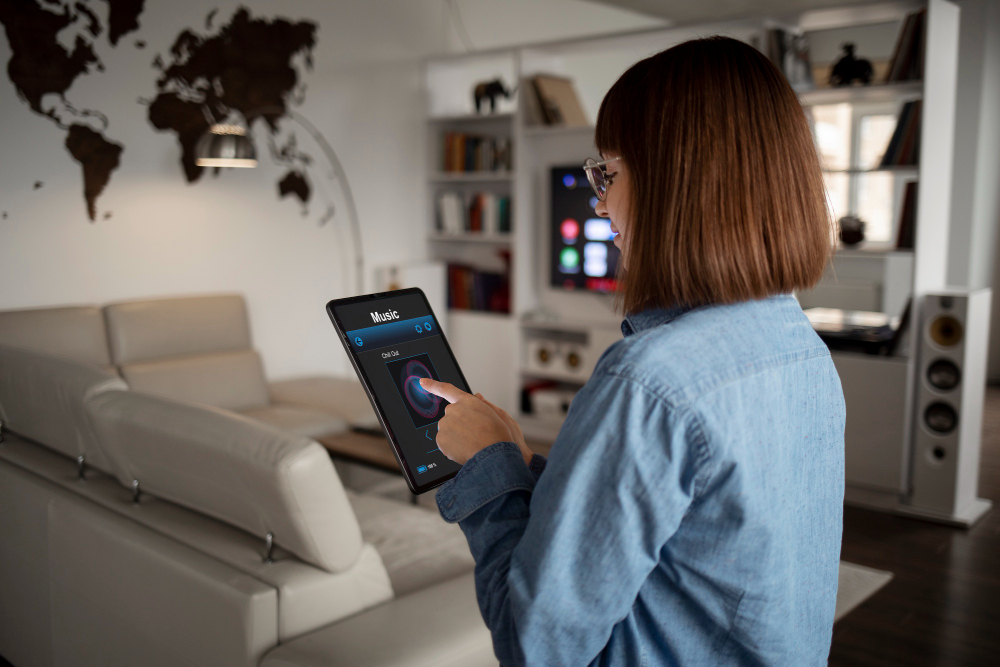
Home automation technology is at the forefront of changing our everyday lives in the fast-paced world of today, where technological advancements are occurring at a rapid speed.
This cutting-edge field promises a more efficient and convenient lifestyle where your house easily adjusts to your requirements.
We will delve into the nuances of home automation in this extensive tutorial, demonstrating how it may improve your quality of life on a regular basis.
Benefits of Home Automation
The use of technology to automate and operate a home’s lighting, heating, cooling, security, and entertainment systems is referred to as “home automation”. Using voice commands or smartphone apps, home automation technology makes it possible for homeowners to remotely monitor and operate these systems, improving convenience, efficiency, and security in their homes.
Convenience
Remote Control:
Whether you’re at work, on vacation, or just in another room, home automation gives you the ability to remotely control several of your house’s functions. With this ease, daily tasks become more manageable and responsive to your needs. You can monitor security cameras, adjust the thermostat, and switch off lights all from your smartphone.
Voice Commands:
Voice assistants such as Google Assistant and Amazon Alexa allow you to operate your smart devices with simple voice commands. Using your smart home is tremendously convenient thanks to this hands-free interaction, especially when you’re multitasking or have other tasks on your plate.
Scheduled Automation:
Smart device actions can be scheduled, including turning lights on or off at certain times, adjusting the thermostat before you get home, or even brewing coffee in the morning. Convenience is increased by this hands-free scheduling method since it removes the need to manually launch tasks or recall them.
Interconnected Ecosystem:
It is possible to combine numerous smart gadgets into a single ecosystem. For instance, you can design “scenes” or “routines” that, when activated by a single command, start several different tasks. Saying “Goodnight” can, for example, lock doors, turn down lights, and activate the security system all at once. This improves convenience overall and makes daily tasks simpler.
Efficiency
Energy Optimization:
Energy consumption can be maximized with home automation systems, such as smart lighting and thermostats. By adjusting settings based on your preferences, they maximize energy efficiency and lower your carbon footprint and utility expenditures. In order to maintain the perfect temperature in your house at all times, smart thermostats may even adjust to your schedule and occupancy patterns.
Real-Time Monitoring:
Monitoring your home systems in real-time enhances efficiency even further. You can monitor energy usage, find leaks in the water supply, and get notifications when an appliance breaks down. With the help of this knowledge, you can decide how much energy you use wisely and take preventative action to avoid wasting it.
Reduced water and resource consumption:
Home automation can optimize resource and water utilization in addition to energy. Water waste can be minimized by smart irrigation systems that can modify watering schedules in response to weather conditions. Further increasing efficiency, smart appliances can reduce the amount of water and detergent used when doing laundry.
Time Management:
Routines and repetitive tasks can be automated to free up time for more crucial duties. With the help of home automation technologies, you can focus on your family, career, and personal interests while streamlining everyday tasks and increasing your overall productivity.
Energy Efficiency and Cost Savings
Energy Efficiency
Increasing the energy efficiency of your house is one of the main benefits of home automation. By adjusting the temperature while you’re away, smart thermostats help you save money on energy costs. It is possible to program lighting systems to save energy while maintaining comfort. The outcome? A more economical, greener house.
Optimized energy usage:
Home automation technology lets you automate and control a variety of your home’s systems and appliances, which leads to optimal energy use. For instance, smart thermostats ensure that your heating and cooling systems operate effectively and not inefficiently by adjusting the temperature in accordance with your preferences and occupancy patterns.
Reduced standby power consumption:
“Vampire power,” or standby power, is the term for the phenomenon where many electronic devices utilize energy even when they are not in use. By automatically shutting off gadgets when they’re not in use, home automation can help reduce this waste and save energy.
Scheduled Automation:
You can establish routines that use less energy by scheduling actions. One way to cut down on needless electricity use is to set your lights to switch off automatically during the day. Similar to this, appliances can be programmed to operate at cheaper electricity prices during off-peak hours.
Smart Lighting:
Dimmable smart switches and LED bulbs are examples of smart lighting systems that enable accurate control in addition to efficient illumination. Light levels can be changed to suit your needs, saving energy and preserving convenience and comfort.
Cost Savings:
Cost savings related to home automation usually refer to the monetary advantages of deploying smart systems and technologies. Owners of homes can lessen them. Optimization may be the cause of these savings.
- Energy invoices
- Upkeep expenses
- Function-related costs
- Home automation’s automatic and energy-efficient features
- Use of energy
- Lower usage of water
- Effective resource administration
In general, cost savings in home automation refer to obtaining financial advantages through increasing the efficiency, environmental friendliness, and economy of operation of the house.
Lower utility bills:
Lower utility bills are the main financial gain of energy-efficient home automation. It is possible to drastically lower your gas and electricity costs by managing your energy use. For instance, using a smart thermostat over time can save a significant amount of money on heating and cooling.
Peak Demand Management:
Certain home automation systems assist you in controlling the amount of electricity used during peak times. You can reduce your monthly utility costs by operating energy-intensive equipment during off-peak hours when electricity rates are lower.
Long-Term Savings:
Although installing and buying home automation equipment may come with some upfront costs, these can be offset over time by savings on energy and maintenance. Many homeowners discover that home automation offers a good return on investment (ROI), which makes it a wise financial move.
Reduced maintenance costs:
Technology for home automation can speed up the process of determining which parts of your home systems need maintenance. Early problem identification can save maintenance costs by extending the life of systems and appliances, preventing expensive repairs, and lowering the need for replacements.
Enhanced Security
Not only can home automation increase your comfort level, but it also increases safety. Using cameras and sensors, smart security systems let you keep an eye on your property from a distance. Get real-time notifications and respond right away to any questionable activity. You can relax knowing that someone is constantly keeping an eye on your house.
Automation technology provides features like motion sensors, smart security cameras, and remote monitoring to improve home security. When there are security breaches or other questionable actions, users can receive real-time warnings and respond right away.
Comfort and Lifestyle Improvement
The goal of home automation is to improve your life, not merely make it more useful. You can set the ideal mood for any event with automation. Several taps at your house will set the mood for a romantic supper or a quiet movie night. It is the pinnacle of contemporary living.
A more cozy and pleasurable home can be achieved with home automation. The ideal lighting, temperature, and atmosphere can be adjusted by users for a variety of events, including movie evenings and romantic feasts.
Remote Access:
Using a smartphone or tablet, homeowners may use home automation to monitor and operate their systems from any location. You may make adjustments even when you’re not at home thanks to this remote access, which offers comfort.
Customization:
Because home automation systems are so flexible, homeowners may adjust the settings to suit their tastes. This degree of customization guarantees that the user’s demands and lifestyle are met by the home automation system.
Conclusion
Recap of the Benefits of Home Automation:
- List the main benefits of home automation, such as increased security, cost savings, ease of use, and energy efficiency.
- Stress again how these advantages can change our daily lives at home.
Encouragement to Embrace Home Automation:
- Inspire readers to investigate and use home automation technologies to improve the comfort, effectiveness, and security of their lives.
- Stress the possibility of long-term financial savings and enhanced quality of life.
Future for Home Automation Technology:
- Offer perspectives on the further advancement and expansion of home automation technology.
- Talk about how this field will probably change and adapt to new developments and demands.


